Tuesday, 23 August 2011

Guest Blog: Biking in South Africa

Ok, here were are with part two of the occasional "round the world" series of guest blogs. This time it is the turn of a very good friend of mine living in Johannesburg, South Africa. My grateful thanks go to "Caff the Saff" for penning the following piece - hope you enjoy it....

Biking in South Africa - by Cathy Brown

South Africa is one of the most diverse and enchanting countries in the world. Exotic combinations of landscapes, people, history and culture offer the adventure rider a unique and inspiring experience. I am definitely a non-biker but I’m hoping to share what I know about South African biking with you.

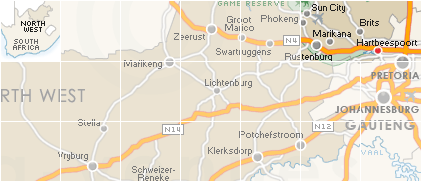
I am from Johannesburg and ever since I can remember I have known about the Harties Breakfast run. This is a 59km or 36.7 mile ride to Hartebeestpoort Dam. The ride takes place on a Sunday. Harties is a great destination with lots of places to visit when you get there - like the Bushbabies Primate Sanctuary and Elephant Sanctuary, also the de Wildt Cheetah Reserve is en route. There are great places to eat and they are well used to seeing lots of bikers on weekends. 

The N4 main road into Harties is well kept, with an occasional police presence.Generally, bikers and cops are friendly and respectful to one another - as long as papers are in order there is a good relationship.

Harties by night

An interesting event taking place this year is the Pro-Africa Adventure Tour, starting from Johannesburg. The plan is to ride through 10 countries just using back roads, with only old fashioned maps and instinct to rely on. The group will have to be self-sufficient and look out for each other as there will be no back up or support vehicles to step in to help. The group will ride through 10 countries including Angola, Botswana, Zambia, Tanzania, Mozambique, Zimbabwe, Malawi, Lesotho and Swaziland - one country per month. It sounds quite a trip!

There are other popular bike events, such as Mandela Day which is recognised as an international day of humanitarian action in celebration of Nelson Mandela’s life and legacy. People are called to devote 67 minutes of their time to serving their communities (this year it is 67 years Mandela has spent making the world a better place). 
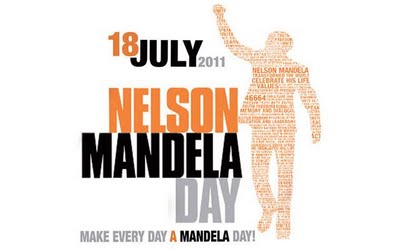
Mandela Day this year fell on 18 July and a sprinkling of celebrities joined a group of ordinary bikers leaving Monte Casino in Johannesburg on 11 July, making their way through Gauteng, the Free State, KwaZulu Natal, Mpumalanga and parts of Swaziland. The 200km ride would take the group into more rural terrain too. They would then devote 67 minutes of their time to activities at various community projects along the way, returning to Pretoria on the former president’s birthday on the 18th

In South Africa, we have quite an active ‘Think Bike’ campaign which aims to target motorcycle and road safety. There is a good reason for this - road safety in South Africa is nothing less than shocking. For the most part there is no police presence and those that are about take bribes for everything. It does however, depend on the province – for example, in KwaZulu Natal, they are quite good there in trapping speedsters. You don’t drink and drive there and sentencing is very harsh. Others are much more lenient – if they catch you at all.

During the holidays, for example at Christmas, everyone heads to the coast and the amount of fatalities at this time is ridiculous - even though the roads are in good condition. A big problem is taxis/mini buses that are loaded too full – if they are supposed to have 11 people they will squeeze in 20. These vehicles are not roadworthy most of the time and a lot don’t even have licences. You can imagine the deaths that occur from this including killing bikers and other road users. A two-vehicle collision can easily have double figure fatalities.

According to the World Health Organization, 14,920 people are killed on South Africa’s roads per year. This is 5 times more than the UK, even though we have a smaller population of 50.5 million. In addition, there are 219,978 road injuries a year. Accidents in South Africa cost R50 billion a year (£4.3bn).

Bike jacking is present - bikers are vulnerable, as you can imagine. They are not targeted more than any other type of hijacking though (that’s not much comfort, I know!). However, bikers can sometimes be their own worst enemy because they know they can get way with riding without a licence plate so they do what they want on the roads and often come off second best. Nevertheless, bikers are not seen as rebels or undesirables here. People come from all walks of life with a passion for biking. There is no colour associated with biking either and there are many women bikers too. Often children accompany their parents on rides so it can be very much a family outing.

In South Africa the fastest growing segment is the Adventure type motorbikes like the BMW F1200GS, F800GS, Yamaha Tenere 660 and 1200, Triumph 800 and 800XC, KTM990 or similar. We also have a rather huge Harley Davidson following. Naked type bikes are few and far between. Sportbikes are still popular but the sales are declining.

From the different aspects of biking in South Africa that I have written about I hope you can see that while there are problems, there are also many advantages to biking in South Africa – including good roads, a vibrant culture, stunning scenery and a friendly welcome. I hope you have learned a bit about South African biking from this article and maybe one day you will visit South Africa on a biking holiday yourself!



Tuesday, 16 August 2011

Lost in Hollywood

What is the greatest motorcycle movie ever made? It's a difficult one. While bikes and bikers have featured in many films across the years, actually, for a pastime and culture that is popular around the world, there are very few mainstream movies that are about biking itself - and even fewer that are any good! Let's have a quick look at a few of the better ones....

The 50s and 60s were when biking really started to gain in popularity and this was a time when bikes and bikers started to be identified as part of a kind of a rebellious sub-culture.

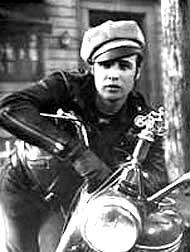
Films like "The Wild One", starring Marlon Brando, helped set that trend. It all looks a bit dated now but this is a film that helped set the tone of what biking was all about at the time - social outcasts, attitude, lots of black leather, powerful bikes and the communities and rivalries that grew up around it all. 

For that aspect at least, "The Wild One" was an important film.

Steve McQueen's "The Great Escape" is often held up as a classic "bike" film but really it's a war and prison breakout story. It helped cement the image and "coolness" that surrounded bikes and McQueen himself was a popular hero at the time as well as a bike enthusiast and racer and was always good to watch on screen - but as far as I'm concerned, it's not really a "biker" movie in the true sense. 

Its somewhat unfortunate legacy is that it is usually aired as a "filler" in Christmas tv schedules these days!  

Ask most people what they consider to be the no.1 biker film of all time and chances are that "Easy Rider" will figure high on the list. This is a film that has almost entered cinematic folklore as THE Hollywood depiction of biking culture. Certainly, it seemed to capture the time well and in Peter Fonda, Dennis Hopper and a young Jack Nicholson, it had a good cast. The notorious Hell's Angel Sonny Barger acted as consultant for this film and he rides a Sportster in it. Steppenwolf's classic track "Born to be Wild" also helped set the tone. Personally, I think the film is a load of rubbish but no-one can doubt its place in American biking history and culture.

"Easy Rider" was released in 1969 and it spawned a great many sub-standard "copycat" movies - really, what followed was a period of around three decades where biking films only attained B-movie status. And there were some absolute shockers along the way: "Outlaw Riders", "Electra Glide in Blue", "The Wild Riders", "Bronx Warriors" "I Bought a Vampire Motorcycle", "Knightriders" etc etc. All following a depressingly similar format. 

But there was also the odd gem along the way - and it took independent film makers to forge a different path to what had gone before. 

The classic British film "Quadrophenia" (1979) remains one of my favourite films to this day. Simple and effective, with good imagery and a terrific cast, it captured young angst and the Mods v Rockers rivalry of 60s Britain perfectly. 


Then, the 1981 release of "Silver Dream Racer" reflected the British public's burgeoning interest in bike racing at the time of Barry Sheene and others. In it, a young bike enthusiast inherits the prototype for an incredibly fast machine which was designed by his brother. He successfully gets the finance for it, and uses the bike to challenge for the world championship at Silverstone. 

SDR wasn't the greatest film by any stretch of the imagination but as with Quadrophenia, it was something different to what had gone before.

Fast forward to the 2000s and there are three further films worthy of mention in this piece - and guess what, the one made in Hollywood was comfortably the worst of the three! "Wild Hogs" (2007) could have been a really interesting film. It is essentially about a group of middle-aged riders setting off for a journey across America. But instead of the 'voyage of discovery' film it could have been, Hollywood turned into a comedy - worst of all a comedy that pokes fun at the concept of middle-aged bikers. A terrible, terrible film.

"The Motorcycle Diaries" (2004) tells the story of a young Che Guevara and his friendship with Alberto Granado, a fellow medical student. Together, they take a motorcycle trip across the South American continent. 

This is a film that is quite unlike anything else in the biking movie genre - it is a story of discovery, of the people they meet on their journey and of the poverty and hopelessness of the poor and disenfranchised that they encounter along the way. For Guevara, this trip was a political awakening and a turning point in his hitherto sheltered, carefree life. We all know what happened next.... Highly recommended. 

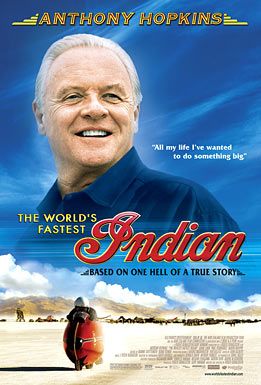
As is traditional, I have saved the best until last. As good as Quadrophenia and The Motorcycle Diaries are, there is one film that towers above them as a true homage to what bikers and biking is all about. "The World's Fastest Indian" (2005) is based on the true story of Burt Munro, a bike racer from New Zealand. Superbly played by Anthony Hopkins, this is a film that portrays the true essence of biking - an ordinary man, obsessed by motorbikes, tinkering around in his garage in an effort to build a bike to go faster that anyone else. It tells the story of Burt who modified a 1920 Indian Scout, paid his passage from New Zealand to America and then raced the bike he had built to set a land speed record at the Bonneville Salt Flats in Utah. 

At the time of the record attempt Munro was 68 years old and was riding a motorbike that was 47 years old! The record he set still stands to this day.


For me, "The World's Fastest Indian" is one of the best films ever made of any genre - it represents the triumph of the human spirit, it lifts your heart and leaves you with a great big smile on your face. It is deservedly number 1 on my list - but what say you?

Monday, 8 August 2011

The question of organ donation

Somewhat unkindly, bikers are often referred to as "organ doners in waiting" - yet organ donation is a life choice that actually is widely supported in the biking world. It probably has something to do with the rather troubling statistic that bikers are 30 times more likely to die in accidents than car drivers. That kind of risk tends to concentrate the mind somewhat so it is hardly surprising that bikers generally take a more sanguine view of organ donation than do other sections of the population. Whilst by no means wishing to be fatalistic, there is no denying that as bikers we are at significantly greater risk of being killed while going about our business and so the widely held view seems to be that it is incumbent on us to take the necessary steps to ensure, should the worst happen, that our organs won't go to waste.

The facts are stark: more than 8,000 people in the UK need a transplant, but a shortage of donors means that fewer than 3,000 transplants are carried out annually. Around 1,000 people every year die for want of transplant surgery - as the British Medical Association puts it, 'bodies are buried or cremated complete with organs that could have been used to save lives'.

It is also estimated that over 95% of people support organ donation (and would accept a donated organ themselves) but only 27% of the population are on the organ donation register. The widely-held view is that something needs to be done to address this disparity.

Many would like to see the UK adopt (as other European countries have) a system of "presumed consent" - that is, a system that presumes that organs may be used for others upon death. No requirement to sign a register or carry a donor card, simply a system that assumes that the individual automatically will donate organs upon death, unless one opts out. Such a system would create a default position that life should be saved rather than a default position that life could be lost and this was the desired policy of our previous Government. Clearly, such a policy would represent a significant step-change from how the system currently works and when proposed it created quite a furore - not just amongst civil liberties and religious groups but also many in the medical profession. The memory of recent organ retention scandals (at Alder Hey and Bristol hospitals) casts serious doubt on whether it is right for healthcare professionals to ever presume consent. The proposal was quietly shelved after the previous Government were voted out of office.

So what is the answer? Well, the current Government is trying a different approach. From 1 August, new driving licence applicants will have to tick one of three boxes to answer a question on organ donation before they can complete their application:

  • Yes, I would like to register
  • I do not wish to answer this question now; or
  • I am already registered on the NHS Organ Donor Register.


This is a pilot scheme to test the ‘nudge’ theory. It is thought that since a person is required to respond to the question, they will spend more time considering the question. It is hoped that the change will double the percentage of people choosing to join the organ donation register when applying for a driving licence. This "prompted choice" scheme has already been trialled successfully in several US states - for example, in Illinois, where the percentage of donors who have registered has increased from 38 per cent to 60 per cent since 2008. It is not yet known how the results will play out in the UK, indeed the scheme has been criticised in some quarters for not having an explicit "no" option. Presumed consent by the back door is the charge levied by opponents.

But really, what is there to oppose? Yes, there is a discussion to be had about systems and methods but surely noone can doubt that organ donation is intrinsically a good thing and should be promoted? I think the current "nudge" strategy is a good one but its drawback is that it only captures new driving licence applicants - the numbers still need to increase dramatically so other levers are needed. Personally, I would go further - I don't believe families should be allowed to refuse if the deceased has chosen to donate their organs. I am on the organ donor register but would be very unhappy if I thought that one of my family would seek to ignore my wishes and refuse consent when I die (not that there's much that I could do about it!).

Whether presumed consent is the right policy I'm not so sure. There are very significant political and moral difficulties to overcome and I'm not sure that argument is winnable. But we have to do better than the current numbers. The way to look at this is.... if you or one of your loved ones was in need of a transplant, would you accept a donor organ? If the answer is yes then really you should know what to do....

NHS Organ Donor Register can be found HERE

Thursday, 4 August 2011

Where the REAL problem lies....(Part II)

Following on from the last piece, there has been a bit of a conversation taking place on my bike club website on standards of driving (I say "bit of a conversation" because, although we're a group of bikers, there's hardly ever any talk about bikes - but that's by the by....!). Anyway, the subject was car drivers and cyclists and the gist of the conversation was an observation that when a car driver is confronted by a cyclist riding in front of him/her, they pull out and overtake them taking up half the other side of the road - whether they are on a blind corner, or have a motorbike or another car coming towards them. The thread then turned into a bit of a general moan about driving standards generally and about how cyclists often do themselves no favours by the way they ride.

I think the central point of the thread was well made but I also think it goes much further than a problem with cyclists. Drivers pulling out and around other vehicles (cyclists or otherwise), usually without looking or indicating, is probably the one thing that incenses me more than any other when out riding. Think about it, you're on a normal urban carriageway and a vehicle two cars ahead wants to turn either left or right. What does the car/van/taxi immediately in front of you do? That's right, they suddenly lurch left/right into your path (or a cycle lane) in order to get round the "obstruction". How many times do you see it happening? It's the same at traffic lights - drivers will nip into a right or left hand filter lane to get a bit further ahead in a queue of traffic, realise they're obstructed by people who actually want to turn and then lurch back out in front of you in order to continue straight ahead. That they might take someone else out in the process seems not to be a consideration. And worst of all is that they usually get away with it by forcing people to swerve or break sharply - bikers and cyclists being the most vulnerable in these situations. If there's one thing that gets on my tits about the standard of driving nowadays, this is most certainly it.


So what's behind it? Is it stupidity? Is it lack of awareness? Is it that drivers cannot deal with competing considerations? No - as far as I'm concerned it is simply selfishness, a desire not to be held up for more than a nanosecond and a complete lack of consideration for others. I really do believe that the majority of drivers nowadays simply do not give a flying one for any other road user. And as roads become ever more congested, so this sort of behaviour will become the accepted norm - if it hasn't already. I know that I expect these things to happen regularly so make allowances - but isn't it wrong that we have to?

You might think that our esteemed Government and brave law enforcers might be concerned about what is happening on our roads and the general deterioration of driving standards and common courtesy. So what do they about it? Yep, they decide to make the motorcycle test harder!

You really couldn't make it up!

Friday, 29 July 2011

Where the REAL problem lies....

I started out this morning in a really good mood. We'd had a nice evening last night at Epsom races and afterwards, Blondie played on the main stage. Along with a few beers a good time was had (despite not backing a single winner all night).

Anyway, this morning's good mood didn't last very long - on the ride into work (13 miles) I was nearly taken out FOUR times by car and van drivers. The closest shave of the four was nearly getting T-boned by a car pulling straight out from between a row of traffic. The guy didn't look, wasn't indicating and came out at speed - he just didn't give a shit as long as he got to where he wanted to go. I, meanwhile, had to take evasive action and ended up swerving onto the pavement to avoid being knocked off.   

We all know that any idiot can drive a car, just as we know that many drivers go into a sort of auto-pilot mode when behind the wheel. Drivers will hold conversations, listen to the radio, talk on mobiles, even eat and drink at the wheel - all the time supposedly in charge of a ton of metal with an engine in it. I've done it myself. In contrast, when it comes to riding a motorbike, WE have to devote our full attention. Riding a bike takes not only a significant commitment in learning to ride in the first place, but also requires a complete acceptance of responsibility for your own safety. It doesn't matter diddly if you were right or wrong in an accident, you are just as dead.

But why should one group of road users be allowed to be so blasé about driving standards? Having been riding and driving for some years, I decided to look at how the various driving tests are set up these days. There are some crucial differences, as you will see....

Currently, budding drivers and motorcyclists both have to pass a theory and a practical test. Both tests can be taken from age 17. Once through the car test, you are able to drive any car you wish, although the New Drivers Act means that you are ‘on probation’ for two years. So, if you reach six or more penalty points in that time, you’ll lose your licence. Then you’d be back to being a learner driver and having to start again. The rules for motorcyclists are far tighter. These are the current restrictions and age limits that apply:

  • Age 16 - Moped riders are limited to a 50cc scooter and no faster than 50kph (31mph). You will need CBT first.
  • Age 17 - Motorcycle riders can upgrade to a 125cc machine with a maximum power of 11kw (14.6 bhp) manual or automatic. You will need CBT first.
  • Age 17 -You can take the A2 practical test for a full licence of 25 kwh/33 bhp (two year limit then automatically upgrades), or A1 which is taken on a machine of less than 120cc (this will restrict you to a 125 but no L-Plates). You will need CBT and Motorcycle Theory Test first.
  • Age 21 - You are able to take the full direct access course (taken on a bike that produces at least 35 kwh or 47 BHP). You will need CBT and Motorcycle Theory Test first. 

The letters "CBT" stand out in the list above and this is one of the key differences between learning to ride a bike as opposed to driving a car. Today, a learner motorcyclist has to complete a course called "Compulsory Basic Training" (CBT) before they even get to stage one of the test (theory). On successful completion of CBT, a certificate valid for two years will be issued. If the rider has not gained a full moped or motorcycle licence by the expiry of the CBT certificate, they will, if they want to continue riding on the public road, have to retake the CBT course and be issued with a new certificate. CBT has apparently been introduced to help reduce the high number of motorcycle related incidents on our roads. It is said that CBT will better prepare a rider to deal with, and make them aware of, the dangers associated with riding a moped or motorcycle. I'm sure that's true - equally, I'm also sure that this ignores the point that the greatest danger to motorcyclists comes from other drivers!

So why is there no mandatory CBT equivalent for learner drivers? Why are the odds stacked against motorcyclists in this way? Why is it that motorcyclists are deemed to be "the problem"?  

I'm all in favour of improving road safety and the standard of driving generally. What I'm not in favour of is making bikers - and under-21s in particular - effectively second-class citizens. If they're old enough to pay taxes and die for their country in faraway lands, then they're old enough to be treated equally with car drivers. Why should people whose only wish is to get into biking be subjected to such strict rules that are so obviously unfair - when the REAL problem is elsewhere on our roads?

Sunday, 24 July 2011

Always stop - next time it could be you....

One of the things that I particularly like about biking is the sense of community. I still remember my first proper ride on the road on my old 125 back in the early 1980s. It was only a short trip and I had the "L" plates on but as soon as I had turned out of my street, a chap on a bigger bike going the other way "nodded" me. I was made up - I was one of the family straight away! Generally speaking bikers do look out for one another - possibly a little less so these days than was the case years ago but it is still an unwritten rule that if a fellow biker is in difficulty, you stop to help. It's just the done thing.

Over the years I've witnessed accidents, helped pick up dropped bikes or just pulled over for riders who have stopped at the side of the road looking like they have a problem. Technically and mechanically, there's not a massive amount I can offer but I have surprised myself on the odd occasion and got people going again. These days, with mobile phones and other forms of instant communication, help is much more easily at hand and so the temptation is to assume that everything is ok and that assistance is already on its way. But that can sometimes be a risky assumption.

Last week I was riding home from work and decided to take a longer route home for a bit of a bimble. There I was, "giving it the beans" down the A3 when in the distance I could see a bike pulled into a small lay-by at the side of the road, with the rider crouched down looking at it. I had to at least pull in to see if there was anything wrong so on went the anchors and my "spirited" ride was over - for the moment at least. It turns out that my instinct was right - it was a breakdown. Some kind of an electrical fault with the onboard ECU that would need resetting or remapping ("re"-something or other anyway....). What was different on this occasion was that the guy's mobile phone wasn't working so help wasn't actually at hand - and there was no garage, shop or house in the immediate vicinity. All he needed was a local phone call to his mate with a van to come and pick him and the bike up so naturally, I lent him my phone. A simple thing, but a lengthy walk and wait was averted.


Interestingly, as we chatted, I was alarmed to hear that he had tried to flag down a couple of passing bikers, and neither had stopped. He didn't seem impressed - I'm not bloody surprised! Perhaps he just got unlucky. People have lots of deadlines these days and are always in a hurry. Maybe they just didn't see him? Maybe.... Ultimately, I suspect most simply can't be arsed, which I find kinda sad for a movement built on the foundation of community.

Stopping to make sure a fellow biker is ok takes so little effort to do but it can have a big effect - as was the case on the A3 the other night.

After all, next time it could be you....

Wednesday, 20 July 2011

Guest Blog: Biking in Florida

Now that this blog is up and running, so to speak, what I want to do over the next few weeks is offer selected friends in different parts of the world a guest blog - to hopefully get a sense of how biking is seen in their countries, including from a non-biker perspective. I have some good pieces planned. We start this week in Florida, US with a piece from a good friend of mine - an exiled Londoner and fellow Fulham supporter. Unfortunately he rides a Harley, but don't hold that against him. My thanks to Keith for kicking the "around the world" series off - hope you enjoy it.

Biking in Florida, US - by Keith Ridley

Biking in the USA is a huge subject, so let’s start in my neck of the woods. I live in Florida where you can ride all year round, even in the summer, as long as you don't mind looking like a lobster. I personally think Florida winters are the best for riding. I own a 2004 Harley Davidson Fatboy. It is for my relaxation. Even cleaning it I find therapeutic. Since living in the States you get to realise that bikes and trucks are big business and either will take the pride of place in the home. It’s up there with Fulham, big screen TV and the wife - I won’t specify in which order. The bike is a magnet for spending. I must confess I have spent 25% of the original Harley purchase price just on cosmetics.


I will guess that the Japanese sell the most bikes. They can sell a Harley lookalike much cheaper than the real thing. Harley Davidson may not sell the most bikes, but they sell the most after sale merchandise. You can get everything from chrome parts of anything to home ceiling fans that have rumble sounds and head lights. Plus clothing, including leather jackets, gloves, chaps, boots, belts, anything etc. Even wannabe Harley riders buy the gear to wear.

Although the bikes are capable of high speeds, owners don't often race them. Instead, they like their bike to be seen (and heard). Cruising to and from one Harley Dealership to another at the weekends in large groups gets them noticed. Harley encourages bikers to hang out at their dealerships for obvious reasons - it’s a social place to meet up with others and talk bikes. Free food, soft drinks and sometimes live music are provided. Not quite like the good old days meeting at the Ace Cafe on the North Circular and then racing off to the Busy Bee on the Watford bypass, often clocking a ton.  Harleys are all about being seen. They are seldom taken out in the rain or bug season. Some pay thousands for special custom paint jobs.

Planning a vacation? Bikes can be great fun and are well catered for in the States. Even cruise ships pamper to bikers. You can ride them on and ride them off. It must be great for island hopping in the Caribbean. Spend the day riding then you and your bike can relax back on board in the evening, with a bit of TLC to get ready for the next port of call.
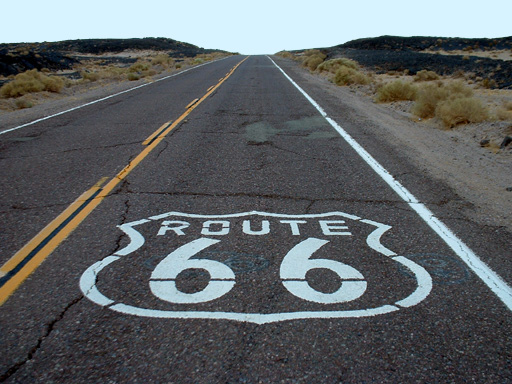
Still on my bucket list for road trips is the ever popular Route 66 ("Main Street of America" or the "Mother Road"). Starting from Chicago, Illinois, then travel through Missouri, Kansas, Oklahoma, Texas, New Mexico, Arizona, and California, before ending at Los Angeles, covering a total of 2,448 miles. The diehards pack only what they can take with them on the open road. Others, and that would include me, can pay for a service that takes care of all that and has everything waiting for you at predesignated hotels on route.


Travelling across the country is a new experience. Road safety is an issue everywhere. Each State may have its own motorcycle road safety laws, which you would need to be aware of. For instance in Florida, helmets are required only for under 21's - in some States it is mandatory for everyone. Speed limits can be different as well - for example, Montana has no speed restriction on the interstate. Noise level is another law. Modified pipes or tuning can earn you a traffic ticket. Even stock bikes can fall foul in some states if the engine is revved excessively. Be mindful, especially between 7pm and 7am.

There are plenty of bike fests, large and small. I have been to a lot of the smaller ones. The format is very similar - it’s like a beauty pageant for bikes. As I mentioned earlier, these bikes are loved and well looked after, some only taking to the road for competition. The largest event for me is Daytona Bike Week. Bikes and bikers descend on the town, sometimes a week before the event. This year over half a million people showed up. It is awesome to see the streets lined with bikes. My friend purchased an RV (Recreation Vehicle) just for events like Daytona. It's big enough to house and transport the bikes and still have room in it to sleep and eat. It's a large mobile home the size of a London bus. 

Just as interesting as the bikes are the people. I can only speak for Harley riders, but they are from all walks of life, doctors, lawyers, teachers, men and women of all ages. Of course, you still get the greasers with tattoos all over their body - and that's just the women! Daytona is a fun week and bikers turn out dressed as flamboyant as the bikes they ride. And the ladies, bless them, wearing chaps and very little else. Phew, I think I need a rub down with Bikers Weekly after mentioning that....

My favourite part of Daytona is the Loop. It's like no other ride I know. It’s freedom, sunshine, open road and graceful curves and for motorcycle enthusiasts everywhere, it's a riders dream. The Loop begins with a northerly trek at the foot of the Granada Bridge on John Anderson Drive in Ormond Beach. Going North, riders are greeted by a cathedral of trees up to the Highbridge Road where they hang a left and go over the bridge and the Intracoastal Waterway (the Halifax River). There are several places to stop along the way and just enjoy the Florida countryside. After more winding turns, you'll come upon Walter Boardman Road where you will make another turn that takes you further west to Old Dixie Highway. When you reach Old Dixie Highway, take another left (to go south) toward Ormond Beach. I recommend it. It's a leisurely ride will give you a taste for Florida's natural beauty. It’s not a race so stop and check out Ormond Park and the Fairchild Oak tree, which is one of Florida's oldest living Oaks. The Loop is approximately 22 miles long and a must for riders who enjoy an open road. [22miles? Is that all? That's like a pop to the shops! - Ed]

The image of the biker in the States has changed over the years. From the Easy Rider and Hell's Angels stereotype (though these still very much exist), to almost respectability and social acceptance.  It's like a club or community. If you stop on the side of the road, it won't be long before another rider stops to check if you need assistance. Bikers are a family.