Monday, 8 August 2011

The question of organ donation

Somewhat unkindly, bikers are often referred to as "organ doners in waiting" - yet organ donation is a life choice that actually is widely supported in the biking world. It probably has something to do with the rather troubling statistic that bikers are 30 times more likely to die in accidents than car drivers. That kind of risk tends to concentrate the mind somewhat so it is hardly surprising that bikers generally take a more sanguine view of organ donation than do other sections of the population. Whilst by no means wishing to be fatalistic, there is no denying that as bikers we are at significantly greater risk of being killed while going about our business and so the widely held view seems to be that it is incumbent on us to take the necessary steps to ensure, should the worst happen, that our organs won't go to waste.

The facts are stark: more than 8,000 people in the UK need a transplant, but a shortage of donors means that fewer than 3,000 transplants are carried out annually. Around 1,000 people every year die for want of transplant surgery - as the British Medical Association puts it, 'bodies are buried or cremated complete with organs that could have been used to save lives'.

It is also estimated that over 95% of people support organ donation (and would accept a donated organ themselves) but only 27% of the population are on the organ donation register. The widely-held view is that something needs to be done to address this disparity.

Many would like to see the UK adopt (as other European countries have) a system of "presumed consent" - that is, a system that presumes that organs may be used for others upon death. No requirement to sign a register or carry a donor card, simply a system that assumes that the individual automatically will donate organs upon death, unless one opts out. Such a system would create a default position that life should be saved rather than a default position that life could be lost and this was the desired policy of our previous Government. Clearly, such a policy would represent a significant step-change from how the system currently works and when proposed it created quite a furore - not just amongst civil liberties and religious groups but also many in the medical profession. The memory of recent organ retention scandals (at Alder Hey and Bristol hospitals) casts serious doubt on whether it is right for healthcare professionals to ever presume consent. The proposal was quietly shelved after the previous Government were voted out of office.

So what is the answer? Well, the current Government is trying a different approach. From 1 August, new driving licence applicants will have to tick one of three boxes to answer a question on organ donation before they can complete their application:

  • Yes, I would like to register
  • I do not wish to answer this question now; or
  • I am already registered on the NHS Organ Donor Register.


This is a pilot scheme to test the ‘nudge’ theory. It is thought that since a person is required to respond to the question, they will spend more time considering the question. It is hoped that the change will double the percentage of people choosing to join the organ donation register when applying for a driving licence. This "prompted choice" scheme has already been trialled successfully in several US states - for example, in Illinois, where the percentage of donors who have registered has increased from 38 per cent to 60 per cent since 2008. It is not yet known how the results will play out in the UK, indeed the scheme has been criticised in some quarters for not having an explicit "no" option. Presumed consent by the back door is the charge levied by opponents.

But really, what is there to oppose? Yes, there is a discussion to be had about systems and methods but surely noone can doubt that organ donation is intrinsically a good thing and should be promoted? I think the current "nudge" strategy is a good one but its drawback is that it only captures new driving licence applicants - the numbers still need to increase dramatically so other levers are needed. Personally, I would go further - I don't believe families should be allowed to refuse if the deceased has chosen to donate their organs. I am on the organ donor register but would be very unhappy if I thought that one of my family would seek to ignore my wishes and refuse consent when I die (not that there's much that I could do about it!).

Whether presumed consent is the right policy I'm not so sure. There are very significant political and moral difficulties to overcome and I'm not sure that argument is winnable. But we have to do better than the current numbers. The way to look at this is.... if you or one of your loved ones was in need of a transplant, would you accept a donor organ? If the answer is yes then really you should know what to do....

NHS Organ Donor Register can be found HERE

Thursday, 4 August 2011

Where the REAL problem lies....(Part II)

Following on from the last piece, there has been a bit of a conversation taking place on my bike club website on standards of driving (I say "bit of a conversation" because, although we're a group of bikers, there's hardly ever any talk about bikes - but that's by the by....!). Anyway, the subject was car drivers and cyclists and the gist of the conversation was an observation that when a car driver is confronted by a cyclist riding in front of him/her, they pull out and overtake them taking up half the other side of the road - whether they are on a blind corner, or have a motorbike or another car coming towards them. The thread then turned into a bit of a general moan about driving standards generally and about how cyclists often do themselves no favours by the way they ride.

I think the central point of the thread was well made but I also think it goes much further than a problem with cyclists. Drivers pulling out and around other vehicles (cyclists or otherwise), usually without looking or indicating, is probably the one thing that incenses me more than any other when out riding. Think about it, you're on a normal urban carriageway and a vehicle two cars ahead wants to turn either left or right. What does the car/van/taxi immediately in front of you do? That's right, they suddenly lurch left/right into your path (or a cycle lane) in order to get round the "obstruction". How many times do you see it happening? It's the same at traffic lights - drivers will nip into a right or left hand filter lane to get a bit further ahead in a queue of traffic, realise they're obstructed by people who actually want to turn and then lurch back out in front of you in order to continue straight ahead. That they might take someone else out in the process seems not to be a consideration. And worst of all is that they usually get away with it by forcing people to swerve or break sharply - bikers and cyclists being the most vulnerable in these situations. If there's one thing that gets on my tits about the standard of driving nowadays, this is most certainly it.


So what's behind it? Is it stupidity? Is it lack of awareness? Is it that drivers cannot deal with competing considerations? No - as far as I'm concerned it is simply selfishness, a desire not to be held up for more than a nanosecond and a complete lack of consideration for others. I really do believe that the majority of drivers nowadays simply do not give a flying one for any other road user. And as roads become ever more congested, so this sort of behaviour will become the accepted norm - if it hasn't already. I know that I expect these things to happen regularly so make allowances - but isn't it wrong that we have to?

You might think that our esteemed Government and brave law enforcers might be concerned about what is happening on our roads and the general deterioration of driving standards and common courtesy. So what do they about it? Yep, they decide to make the motorcycle test harder!

You really couldn't make it up!

Friday, 29 July 2011

Where the REAL problem lies....

I started out this morning in a really good mood. We'd had a nice evening last night at Epsom races and afterwards, Blondie played on the main stage. Along with a few beers a good time was had (despite not backing a single winner all night).

Anyway, this morning's good mood didn't last very long - on the ride into work (13 miles) I was nearly taken out FOUR times by car and van drivers. The closest shave of the four was nearly getting T-boned by a car pulling straight out from between a row of traffic. The guy didn't look, wasn't indicating and came out at speed - he just didn't give a shit as long as he got to where he wanted to go. I, meanwhile, had to take evasive action and ended up swerving onto the pavement to avoid being knocked off.   

We all know that any idiot can drive a car, just as we know that many drivers go into a sort of auto-pilot mode when behind the wheel. Drivers will hold conversations, listen to the radio, talk on mobiles, even eat and drink at the wheel - all the time supposedly in charge of a ton of metal with an engine in it. I've done it myself. In contrast, when it comes to riding a motorbike, WE have to devote our full attention. Riding a bike takes not only a significant commitment in learning to ride in the first place, but also requires a complete acceptance of responsibility for your own safety. It doesn't matter diddly if you were right or wrong in an accident, you are just as dead.

But why should one group of road users be allowed to be so blasé about driving standards? Having been riding and driving for some years, I decided to look at how the various driving tests are set up these days. There are some crucial differences, as you will see....

Currently, budding drivers and motorcyclists both have to pass a theory and a practical test. Both tests can be taken from age 17. Once through the car test, you are able to drive any car you wish, although the New Drivers Act means that you are ‘on probation’ for two years. So, if you reach six or more penalty points in that time, you’ll lose your licence. Then you’d be back to being a learner driver and having to start again. The rules for motorcyclists are far tighter. These are the current restrictions and age limits that apply:

  • Age 16 - Moped riders are limited to a 50cc scooter and no faster than 50kph (31mph). You will need CBT first.
  • Age 17 - Motorcycle riders can upgrade to a 125cc machine with a maximum power of 11kw (14.6 bhp) manual or automatic. You will need CBT first.
  • Age 17 -You can take the A2 practical test for a full licence of 25 kwh/33 bhp (two year limit then automatically upgrades), or A1 which is taken on a machine of less than 120cc (this will restrict you to a 125 but no L-Plates). You will need CBT and Motorcycle Theory Test first.
  • Age 21 - You are able to take the full direct access course (taken on a bike that produces at least 35 kwh or 47 BHP). You will need CBT and Motorcycle Theory Test first. 

The letters "CBT" stand out in the list above and this is one of the key differences between learning to ride a bike as opposed to driving a car. Today, a learner motorcyclist has to complete a course called "Compulsory Basic Training" (CBT) before they even get to stage one of the test (theory). On successful completion of CBT, a certificate valid for two years will be issued. If the rider has not gained a full moped or motorcycle licence by the expiry of the CBT certificate, they will, if they want to continue riding on the public road, have to retake the CBT course and be issued with a new certificate. CBT has apparently been introduced to help reduce the high number of motorcycle related incidents on our roads. It is said that CBT will better prepare a rider to deal with, and make them aware of, the dangers associated with riding a moped or motorcycle. I'm sure that's true - equally, I'm also sure that this ignores the point that the greatest danger to motorcyclists comes from other drivers!

So why is there no mandatory CBT equivalent for learner drivers? Why are the odds stacked against motorcyclists in this way? Why is it that motorcyclists are deemed to be "the problem"?  

I'm all in favour of improving road safety and the standard of driving generally. What I'm not in favour of is making bikers - and under-21s in particular - effectively second-class citizens. If they're old enough to pay taxes and die for their country in faraway lands, then they're old enough to be treated equally with car drivers. Why should people whose only wish is to get into biking be subjected to such strict rules that are so obviously unfair - when the REAL problem is elsewhere on our roads?

Sunday, 24 July 2011

Always stop - next time it could be you....

One of the things that I particularly like about biking is the sense of community. I still remember my first proper ride on the road on my old 125 back in the early 1980s. It was only a short trip and I had the "L" plates on but as soon as I had turned out of my street, a chap on a bigger bike going the other way "nodded" me. I was made up - I was one of the family straight away! Generally speaking bikers do look out for one another - possibly a little less so these days than was the case years ago but it is still an unwritten rule that if a fellow biker is in difficulty, you stop to help. It's just the done thing.

Over the years I've witnessed accidents, helped pick up dropped bikes or just pulled over for riders who have stopped at the side of the road looking like they have a problem. Technically and mechanically, there's not a massive amount I can offer but I have surprised myself on the odd occasion and got people going again. These days, with mobile phones and other forms of instant communication, help is much more easily at hand and so the temptation is to assume that everything is ok and that assistance is already on its way. But that can sometimes be a risky assumption.

Last week I was riding home from work and decided to take a longer route home for a bit of a bimble. There I was, "giving it the beans" down the A3 when in the distance I could see a bike pulled into a small lay-by at the side of the road, with the rider crouched down looking at it. I had to at least pull in to see if there was anything wrong so on went the anchors and my "spirited" ride was over - for the moment at least. It turns out that my instinct was right - it was a breakdown. Some kind of an electrical fault with the onboard ECU that would need resetting or remapping ("re"-something or other anyway....). What was different on this occasion was that the guy's mobile phone wasn't working so help wasn't actually at hand - and there was no garage, shop or house in the immediate vicinity. All he needed was a local phone call to his mate with a van to come and pick him and the bike up so naturally, I lent him my phone. A simple thing, but a lengthy walk and wait was averted.


Interestingly, as we chatted, I was alarmed to hear that he had tried to flag down a couple of passing bikers, and neither had stopped. He didn't seem impressed - I'm not bloody surprised! Perhaps he just got unlucky. People have lots of deadlines these days and are always in a hurry. Maybe they just didn't see him? Maybe.... Ultimately, I suspect most simply can't be arsed, which I find kinda sad for a movement built on the foundation of community.

Stopping to make sure a fellow biker is ok takes so little effort to do but it can have a big effect - as was the case on the A3 the other night.

After all, next time it could be you....

Wednesday, 20 July 2011

Guest Blog: Biking in Florida

Now that this blog is up and running, so to speak, what I want to do over the next few weeks is offer selected friends in different parts of the world a guest blog - to hopefully get a sense of how biking is seen in their countries, including from a non-biker perspective. I have some good pieces planned. We start this week in Florida, US with a piece from a good friend of mine - an exiled Londoner and fellow Fulham supporter. Unfortunately he rides a Harley, but don't hold that against him. My thanks to Keith for kicking the "around the world" series off - hope you enjoy it.

Biking in Florida, US - by Keith Ridley

Biking in the USA is a huge subject, so let’s start in my neck of the woods. I live in Florida where you can ride all year round, even in the summer, as long as you don't mind looking like a lobster. I personally think Florida winters are the best for riding. I own a 2004 Harley Davidson Fatboy. It is for my relaxation. Even cleaning it I find therapeutic. Since living in the States you get to realise that bikes and trucks are big business and either will take the pride of place in the home. It’s up there with Fulham, big screen TV and the wife - I won’t specify in which order. The bike is a magnet for spending. I must confess I have spent 25% of the original Harley purchase price just on cosmetics.


I will guess that the Japanese sell the most bikes. They can sell a Harley lookalike much cheaper than the real thing. Harley Davidson may not sell the most bikes, but they sell the most after sale merchandise. You can get everything from chrome parts of anything to home ceiling fans that have rumble sounds and head lights. Plus clothing, including leather jackets, gloves, chaps, boots, belts, anything etc. Even wannabe Harley riders buy the gear to wear.

Although the bikes are capable of high speeds, owners don't often race them. Instead, they like their bike to be seen (and heard). Cruising to and from one Harley Dealership to another at the weekends in large groups gets them noticed. Harley encourages bikers to hang out at their dealerships for obvious reasons - it’s a social place to meet up with others and talk bikes. Free food, soft drinks and sometimes live music are provided. Not quite like the good old days meeting at the Ace Cafe on the North Circular and then racing off to the Busy Bee on the Watford bypass, often clocking a ton.  Harleys are all about being seen. They are seldom taken out in the rain or bug season. Some pay thousands for special custom paint jobs.

Planning a vacation? Bikes can be great fun and are well catered for in the States. Even cruise ships pamper to bikers. You can ride them on and ride them off. It must be great for island hopping in the Caribbean. Spend the day riding then you and your bike can relax back on board in the evening, with a bit of TLC to get ready for the next port of call.
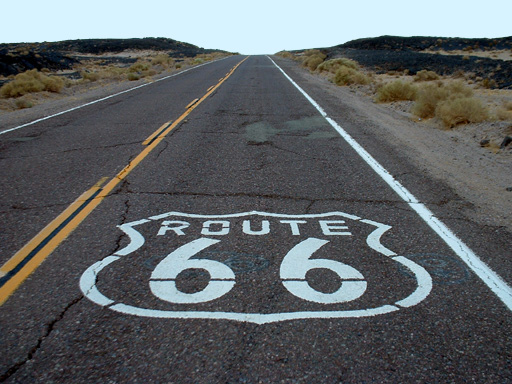
Still on my bucket list for road trips is the ever popular Route 66 ("Main Street of America" or the "Mother Road"). Starting from Chicago, Illinois, then travel through Missouri, Kansas, Oklahoma, Texas, New Mexico, Arizona, and California, before ending at Los Angeles, covering a total of 2,448 miles. The diehards pack only what they can take with them on the open road. Others, and that would include me, can pay for a service that takes care of all that and has everything waiting for you at predesignated hotels on route.


Travelling across the country is a new experience. Road safety is an issue everywhere. Each State may have its own motorcycle road safety laws, which you would need to be aware of. For instance in Florida, helmets are required only for under 21's - in some States it is mandatory for everyone. Speed limits can be different as well - for example, Montana has no speed restriction on the interstate. Noise level is another law. Modified pipes or tuning can earn you a traffic ticket. Even stock bikes can fall foul in some states if the engine is revved excessively. Be mindful, especially between 7pm and 7am.

There are plenty of bike fests, large and small. I have been to a lot of the smaller ones. The format is very similar - it’s like a beauty pageant for bikes. As I mentioned earlier, these bikes are loved and well looked after, some only taking to the road for competition. The largest event for me is Daytona Bike Week. Bikes and bikers descend on the town, sometimes a week before the event. This year over half a million people showed up. It is awesome to see the streets lined with bikes. My friend purchased an RV (Recreation Vehicle) just for events like Daytona. It's big enough to house and transport the bikes and still have room in it to sleep and eat. It's a large mobile home the size of a London bus. 

Just as interesting as the bikes are the people. I can only speak for Harley riders, but they are from all walks of life, doctors, lawyers, teachers, men and women of all ages. Of course, you still get the greasers with tattoos all over their body - and that's just the women! Daytona is a fun week and bikers turn out dressed as flamboyant as the bikes they ride. And the ladies, bless them, wearing chaps and very little else. Phew, I think I need a rub down with Bikers Weekly after mentioning that....

My favourite part of Daytona is the Loop. It's like no other ride I know. It’s freedom, sunshine, open road and graceful curves and for motorcycle enthusiasts everywhere, it's a riders dream. The Loop begins with a northerly trek at the foot of the Granada Bridge on John Anderson Drive in Ormond Beach. Going North, riders are greeted by a cathedral of trees up to the Highbridge Road where they hang a left and go over the bridge and the Intracoastal Waterway (the Halifax River). There are several places to stop along the way and just enjoy the Florida countryside. After more winding turns, you'll come upon Walter Boardman Road where you will make another turn that takes you further west to Old Dixie Highway. When you reach Old Dixie Highway, take another left (to go south) toward Ormond Beach. I recommend it. It's a leisurely ride will give you a taste for Florida's natural beauty. It’s not a race so stop and check out Ormond Park and the Fairchild Oak tree, which is one of Florida's oldest living Oaks. The Loop is approximately 22 miles long and a must for riders who enjoy an open road. [22miles? Is that all? That's like a pop to the shops! - Ed]

The image of the biker in the States has changed over the years. From the Easy Rider and Hell's Angels stereotype (though these still very much exist), to almost respectability and social acceptance.  It's like a club or community. If you stop on the side of the road, it won't be long before another rider stops to check if you need assistance. Bikers are a family.

Wednesday, 13 July 2011

What kind of bikes will we be riding in the 2020s?

I often find myself wondering what kind of bikes will be hitting the market over the next 10 years or so. Bike technology is increasing all the time and to a large degree follows that of cars - in recent years fuel injection, ABS, traction control etc have all transferred across - so what can we expect to happen in the future? We're nowadays seeing bikes with very sophisticated technology. In 2009, BMW came out with the S1000RR and seemed to re-invent that whole class at a stroke. Close to 200bhp, sophisticated electronics - and apparently all very usable for capable mortals (of which I am not one!). And now MV Agusta are about to break the gentleman's agreement that has been in place among manufacturers by releasing their new range-topping, 200bhp, 320kph+ F4 1000RR superbike.


I'm no techno-wizard but looking to the future I think some things are already clear. Within 10 years I think there will be different materials used in manufacture for weight saving and styling and design will become more and more radical.

I also think we will see much more happening on bike electronics - switchable modes and factory performance kits, perhaps even KERS as standard? Really, the sky is the limit in terms of power and gadgetry, though taking the new BMW and Agustas as examples, it seems to me fairly ludicrous to build bikes capable of such ridiculous speed and power on the public road. But will we now see a new bhp "arms-race" developing amongst the major manufacturers? And what will these bikes cost in the future? How do you keep such high-tech machinery affordable to the masses?

As governments advance the green agenda and exponentially screw us with taxes to pay for it, smaller bikes with good fuel economy figures will hold greater and greater appeal I think - especially in urban areas. The Ninja 250 has been one of the best selling bikes for the last couple of years. The new Honda CBR250 is also selling well. Smaller bikes are selling like mad in Asia and are arguably carrying the cost of developing the higher spec bikes that head for western markets - which is slightly odd given that in the UK and across Europe, sales of sportsbikes are dwindling. Cruisers, nakeds, tourers and "real world" bikes seem to me to represent the future. Those are what's hot right now and manufacturers are beginning to take note of the market shift, so I think we'll see more technology advances there over the next few years. Ducati has already laid down the challenge with the technical advancements seen on the new Diavel. Others will surely follow.

As for the more "functional" side of biking, it seems clear that electric bikes are evolving very quickly, and looking into my crystal ball, I anticipate that in 5-10 years time, they will be very competitive performance-wise with their smaller capacity, petrol powered equivalents.

Of course, the key to their widespread appeal will be whether or not bike enthusiasts accept the differences - for example, in sound, power delivery and recharging range. However, as battery technology improves, for urban commuters I think they have the potential to take off in a big way.  Will we begin to see viable electric bikes in the mass performance market, I wonder?

Anyway, these are just my few thoughts - what do you think we'll be riding in the next decade?

Monday, 11 July 2011

Why are there so few black bikers?

Ok, going to have to be a bit careful here - this is one of those tricky subjects that no matter what you try and say and how you try and say it, people are likely to raise their eyebrows or question motives. I want to pitch this right so let's see how we go with it....

The ride into work the other morning was a nightmare - what is it about a bit of rain that turns other road users into idiots? Anyway, about half way, I stopped at a set of lights and a guy on a GSX-R600 pulled alongside. We exchanged a few words, as you do - "bloody nightmare this morning", "roads are like a poxy obstacle course" "did you see what that twat did" - sort of thing. Anyway, I noticed that the fella was black (I'm observant like that....!) and it prompted me to recall a question I've often thought to myself but have never had an answer to (or indeed ever voiced): why are there so few black/minority ethnic bikers?

For the record, there is no hidden agenda here - it really is a genuine question. In terms of numbers, I have only ever known two black guys that ride - one (Hutch), a clubmate, rides a KTM and VFR, the other (Barry), a work colleague, a Fireblade, which he's turned into a bit of a cafe-racer type thing. That's it - and for whatever reason I don't see many others on the road either. All this having lived in and around one of the biggest and most cosmopolitan cities in Europe all my life.

Brothers.... (though judging by the size of mine and Steve's tits, maybe "sisters" is more appropriate...!)

I suppose one could have levelled the same observation at women years ago. This was largely a macho/chauvanistic/acceptance issue, which thankfully has gradually eroded over the years. Women are now accepted as serious and knowledgable riders and the biking fraternity is better for it in my view. So why hasn't the same happened in BME communities? The answer, at least to some extent, must be cultural. Biking has traditionally been seen purely as a male orientated thing - and white males at that. The biking culture is also identified with particular music genres/performers - again mostly white and male, as are the audiences in the main. That type of culture seems ingrained.

I also wonder whether access and opportunity has been a problem. Without wishing to sidetrack into the social politics of the era, the biking revolution that happened in the 1950s and 60s also coincided with a period of large scale immigration and the people coming into this country generally went into low grade and poorly paid jobs. So I assume that the mothers and fathers in successive generations were more concerned with putting food on the table and establishing a place within a resistent society - therefore, a biking culture didn't take hold in those communities.   

Or is there a problem within the biking fraternity? I personally haven't witnessed anything myself but it has often been suggested that parts of the biking world - in particular, the "outlaw" groups - have a certain "reputation" in these matters. Bikes tend to attract macho personalities. Macho personalities attract other macho personalities, forming like-minded groups - and this starts to take us into what gang culture is all about. A gang is by definition a group that has common interest. To the uninitiated, biking is often seen as synonymous with Hell's Angels and the like, and generally you don't see much in the way of diversity in biker gangs. Certain patch clubs simply don't allow black members. I find this thoroughly depressing - bikers as a group are often discriminated against so it seems to me that the last thing we should be doing is discriminating against others.    

A look across the pond reveals far greater numbers and a great many different biker groups whose membership is almost exclusively black. So not only are there more black/minority ethnic people riding bikes, they also gravitate towards their own groups. Does this suggest that a kind of biking apartheid is going on? I don't know enough about North American society and biking culture to be able to comment, so maybe readers over there could? In this country, it seems to me that the numbers are far fewer and I don't really know why - though hopefully this will change as the country becomes ever more culturally mixed (and accepting) and people become relatively affluent compared to their parents.

I don't really have any answers, and maybe the question doesn't even need asking. The whole thing just intrigues me. Over to you for your thoughts....